Why established vineyard blocks develop canopy gaps
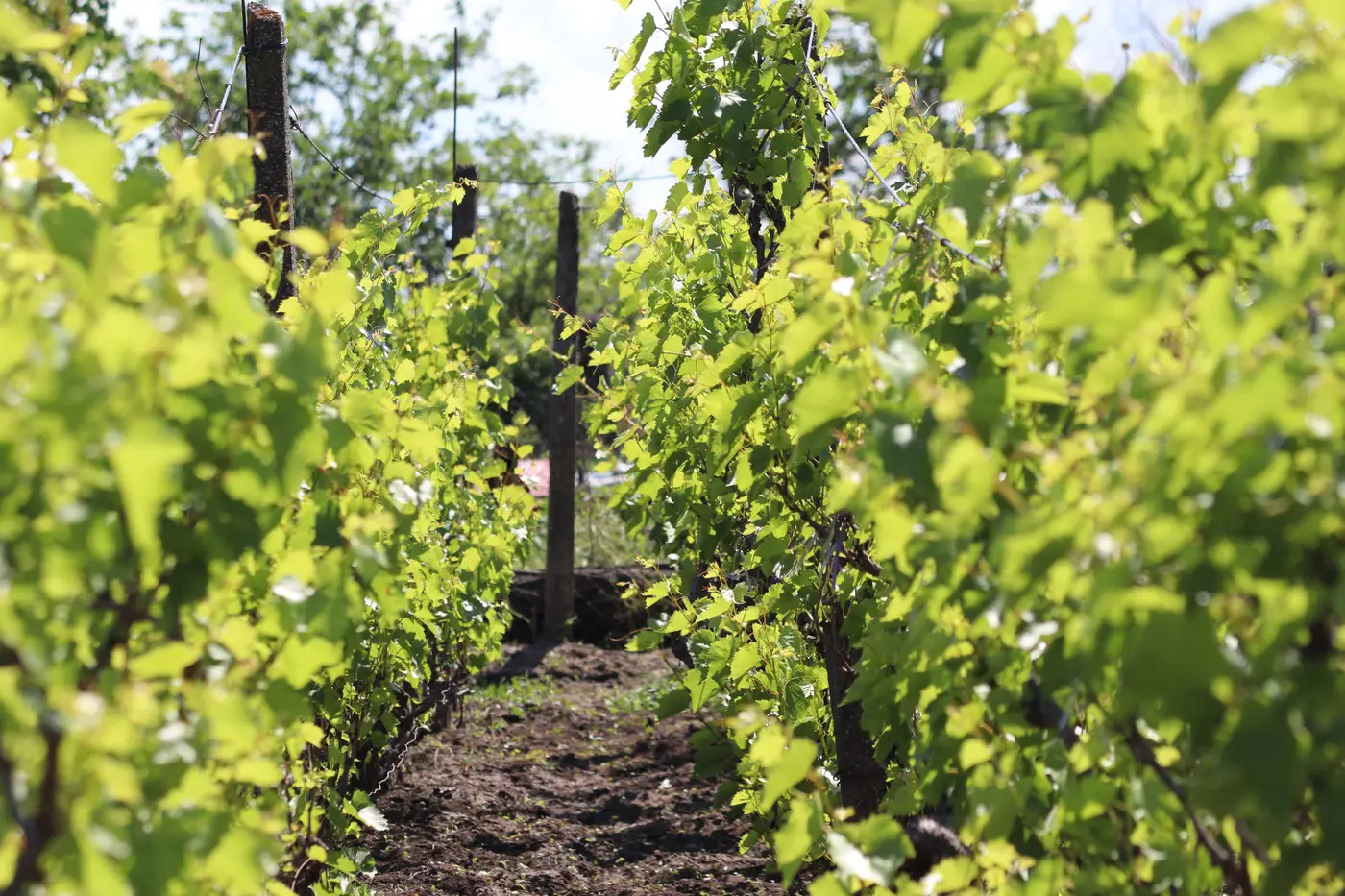
A block that looked full five years ago can show real holes by year twelve. Vineyard managers notice it at pruning, during an irrigation walk, or when the picking crew mentions a gap they had to step around. Most of the time the cause is not mysterious once you look vine by vine. A handful of conditions account for nearly all of it.
Trunk disease is usually the biggest line item
In blocks past year eight or ten, Eutypa dieback and the Botryosphaeria family (bot canker) are the most common reason a vine goes from full canopy to half-dead to gone. Both enter through pruning wounds, so the pattern often tracks the pruning crew's work from years back: a run of affected vines along one row, cordon dieback that shows up one arm at a time, wood that cankers out from the cut inward. Esca complex looks different. Tiger-stripe leaf symptoms in summer, then sudden collapse late in the season in a vine that looked fine in June.
None of that is treatable once it's established in the trunk. The response is removal and replant, or retraining from a sucker if the rootstock is sound and the disease hasn't moved below the graft. That call gets made vine by vine, which is a lot easier from a block map than from memory of which row looked rough last August.
Crown gall, nematodes, and what's happening underground
Crown gall (Agrobacterium vitis) causes galls at or below the graft union and on roots, and it tends to follow a frost event or a mechanical injury from the year before that opened the bark. A vine with crown gall can hang on for a few seasons at reduced vigor before it finally goes, which is part of why gaps seem to arrive in waves instead of one at a time.
Root-knot and dagger nematodes do slower damage. Vines in nematode-pressured soil usually don't die outright, they decline over several seasons: shorter shoots, smaller canopy, lower yield, until the vine is dead wood standing in the row. Phylloxera does the same thing on own-rooted vines or a weak rootstock match. Both show up first as a patch of underperforming vines, not a missing one, and that's exactly the stage that's easy to miss walking the row and easy to catch from above.
Mechanical and site causes that get blamed on disease
Not every gap is pathogen-driven. Gopher and vole damage girdles roots and kills vines outright, in patches that match the rodent population rather than the irrigation lines. A clogged or failed drip emitter kills the one or two vines downstream within a season, especially in sandy soil with no lateral water movement. Herbicide drift from a neighboring block leaves a scorched line that can read as disease the following spring. Frost pockets in the low spots of a block kill the same vines winter after winter until someone finally stops replanting there.
Mechanical harvester and trimmer damage to the trunk opens the same door trunk pathogens use, so a machine-harvested block often shows trunk disease gaps a few years earlier than a hand-picked one.
Reading the pattern before you walk the row
The cause usually tells on itself through the pattern. Trunk disease spreads along a row from the original infection point. Crown gall and frost damage cluster at a known injury or a low spot. Nematode and phylloxera pressure shows up as a patch of weak vigor before it shows up as bare dirt. Rodent damage follows the rodents, not the vine rows.
Sorting that out with a clipboard means walking every row and writing down what you see, and on an eighty-acre block that's most of a crew's day, catching only what's obvious at eye level. A full-block canopy and vigor read done from a single flight shows the same pattern from above, every gap and undersized canopy located and scored, before anyone argues about which block gets replanted first.
If next season's replant list is still a guess, see what that block map looks like before you send a crew out to walk it.