Replant or infill: how to call it block by block
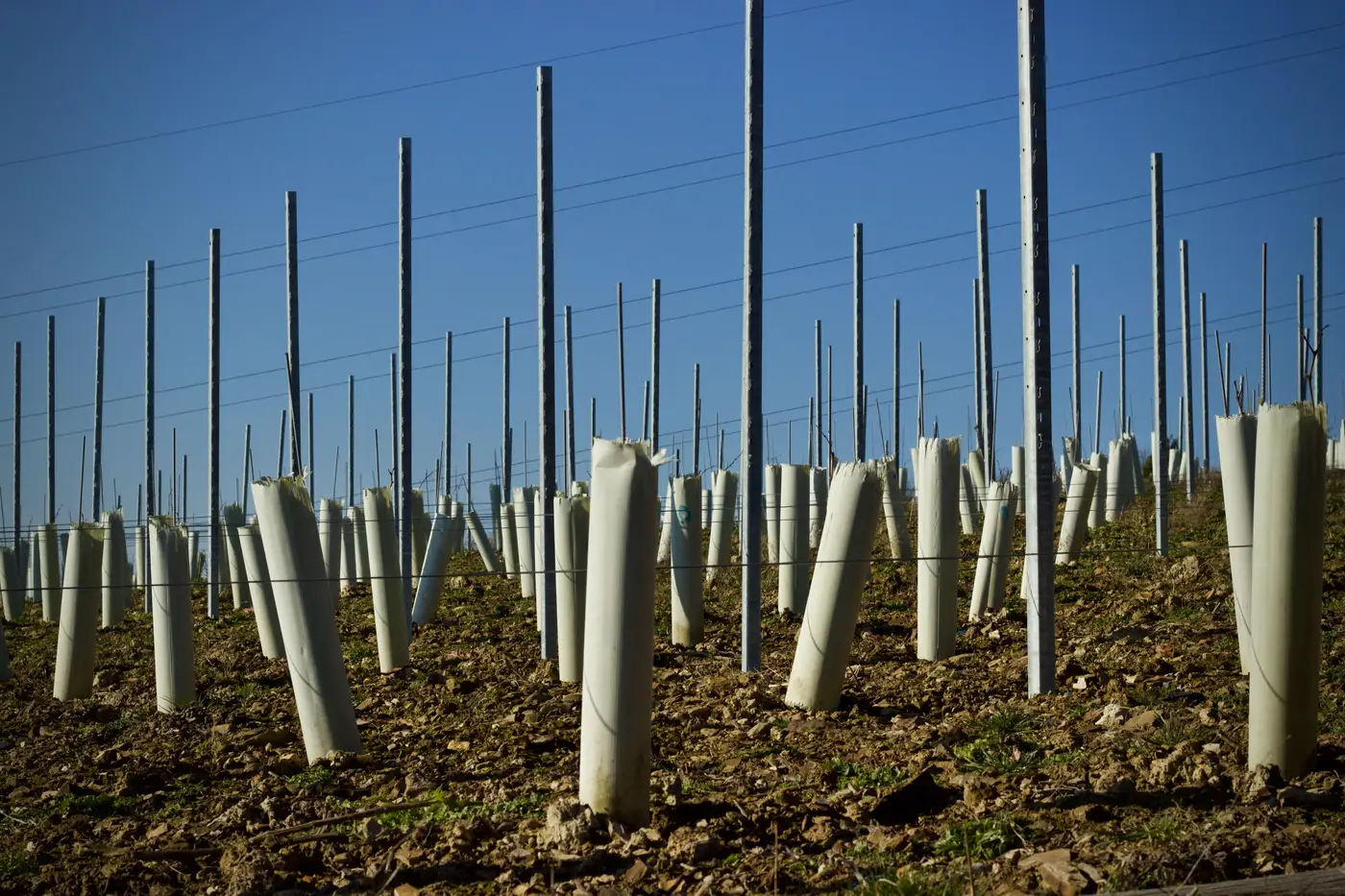
Every block manager has stood at the end of a row, looked at a dead vine, and had to make a call that's really two different decisions wearing the same clothes. Do you drop a new vine into that gap, or is the whole block past the point where one new vine helps anything? Infill and replant get used almost interchangeably in conversation, but they're separate operations with separate costs, separate timelines, and separate answers to "is this worth it."
Infill is a patch job on a block that's still working
Infill means putting new vines into gaps in an otherwise productive, structurally sound block. The trellis is fine. The irrigation is fine. Most of the vines around the gap are carrying a normal crop. You're just replacing the ones that didn't make it, whether that's from a bad graft union, a gopher, winter kill, or a vine that never really took in year one.
A young vine dropped into a mature block fights for light and water against neighbors that are three, five, ten years ahead of it, and it rarely catches up on its own. Crews that do infill well plan for extra irrigation at the new vine, sometimes a shade card for the first season, and flag it for a second look the following year, because infill vines fail at a higher rate than the original planting did. It's a maintenance task that still needs tracking, or it quietly repeats itself every spring.
Replant means the block's economics have changed
Replant is a different conversation. You pull the block and start the age clock over, usually because the gap rate has crossed a line where the block can't carry a full crop anymore, or because something structural is wrong that infill can't fix: the wrong rootstock for current phylloxera or nematode pressure, a variety that's lost its market, vine spacing that doesn't fit the equipment you're running now, or crown rot and trunk disease working through enough of the block that it's only a matter of years before it's mostly gaps anyway.
Replant means pulling vines, often fumigating or resting the ground, re-trellising if the row spacing changes, and eating several years of reduced or zero production while the new planting establishes. It's a capital decision that usually gets made at the ownership or vineyard manager level with a multi-year budget behind it.
Pattern matters more than vine count
Two blocks can both be missing 8% of their vines and need completely different responses. If the losses are scattered, one vine here, two there, spread across a block that's otherwise even in canopy and vigor, that's an infill job. If the missing vines cluster along a wet corner, trace a disease front moving down a row, or sit in the oldest section of a block planted in three phases over the years, that's a different problem, and infill on that pattern just delays the replant decision while spending money on vines likely to fail the same way the originals did.
This is the part that's hard to get right from a windshield survey or a walked sample. A crew tallying every tenth row sees the gaps along the rows they happen to walk, which misses the overall shape of loss across the block. A full-block vine count with canopy size and vigor scoring for every plant turns that guesswork into something you can plan a budget against: where the gaps cluster, whether the vines around them are weak too, and whether a section is thin enough that infill is just postponing the inevitable. That's the view Vineyard Mapping is built to hand you once a season, block by block, so you can base the replant-or-infill call on where the gaps and weak vines cluster across the block.
If you're staring down a block with more gaps than last year and no clean answer on which way to go, that's exactly the map worth getting before you order vines.