How to tell a dead vine from a dormant vine in drone imagery
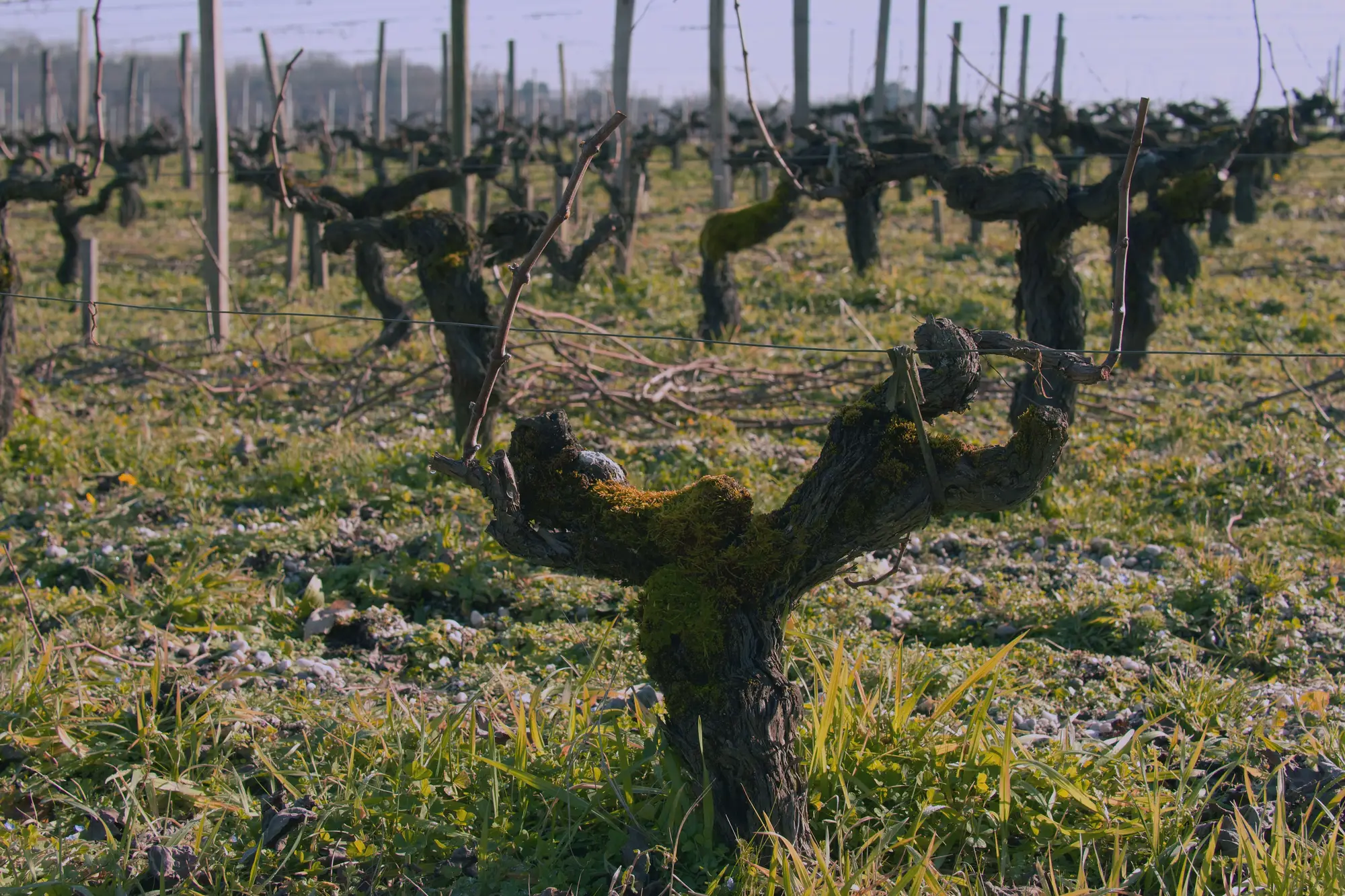
Every block manager has stood at the end of a row in March, looking at a vine with no green on it yet, trying to decide if it's just late or if it's done. From the ground that call is hard enough. From a drone orthomosaic flown at 80 meters, with every vine reduced to a handful of pixels, it gets harder before it gets easier. Here's what separates a dead vine from a dormant one when you're staring at imagery instead of bark.
What dormancy looks like from above
A dormant vine in winter or early spring imagery reads as gray-brown wood with a consistent cane structure. The cordon arms are intact, the spurs are evenly spaced, and if you fly close to bud break you'll start to see small, symmetric swelling at each node before the first leaves unfurl. Spectrally, dormant wood is dry and woody across the whole plant, canopy and trunk alike, because there's no canopy yet to tell them apart.
The trap is that a dead vine looks almost identical in January. Dead wood is also gray-brown and also woody. This is why a single midwinter flight is the worst possible time to try to make this call from imagery alone, and why most growers who attempt it end up walking the block anyway to confirm what the photo already seemed to show.
The real signal shows up three to five weeks after bud break, when live vines start pushing canopy and dead ones don't. A dormant vine that was simply slow will catch up and show a visible green canopy footprint by the time its neighbors are at four or five leaves. A dead vine stays bare wood while the row around it fills in. Flown at sub-10cm resolution, that gap is unmistakable, a bald gray patch in a green row, because you're comparing canopy presence against the plants on either side rather than trying to read dormancy off a single trunk.
Missing vine vs. dead vine vs. weak vine
These three get lumped together in a clipboard tally, but they read differently in imagery and matter differently to a replant plan.
A missing vine is a true gap, no trunk, no stake shadow, nothing. In post-bud-break imagery this shows as bare soil or cover crop where a canopy polygon should be, with the same spacing as the vine on either side of it. It usually means a vine died and was pulled in a prior season, or a graft failed and was never replaced.
A dead vine still has standing wood, a trunk and cordon, but zero canopy at the point where every other vine in the row has filled out. This is the one that gets missed most often in a walk-through, because from thirty feet away a dead trunk with a cover crop growing up around it can look like a live vine that's just been pruned hard.
A weak vine has canopy, it's just thin. This is where vigor scoring earns its keep, because a weak vine won't show as a gap at all. It needs canopy area measured against the block average to flag it, which is exactly the kind of comparison a clipboard tally skips when it's sampling every tenth vine instead of every vine.
Timing the flight to catch all three
If you only get one flight a season, the window matters more than the resolution. Fly too early and dormant vines look dead. Fly too late, well after canopy closure, and weak vines get masked by lateral growth filling in gaps from the neighboring plant. The sweet spot most blocks hit is three to five weeks post bud break, when live canopy is visible and distinct but hasn't yet sprawled enough to hide a stunted neighbor.
That's also the point where a vigor score means something, because every vine in the block has had the same number of growing days to show what it's going to do. A tally taken too early punishes slow starters. One taken too late hides the vines that are genuinely struggling under the shade of a healthy row-mate.
This is the gap between a hand-walked count and a full-block pass. Vineyard Mapping scores every vine in a block from one flight, timed to this window, instead of sampling a few rows and calling it representative. If you're heading into replant planning this season, it's worth seeing what a full count catches that a clipboard walk never does.