How many vines per acre: density by trellis spacing
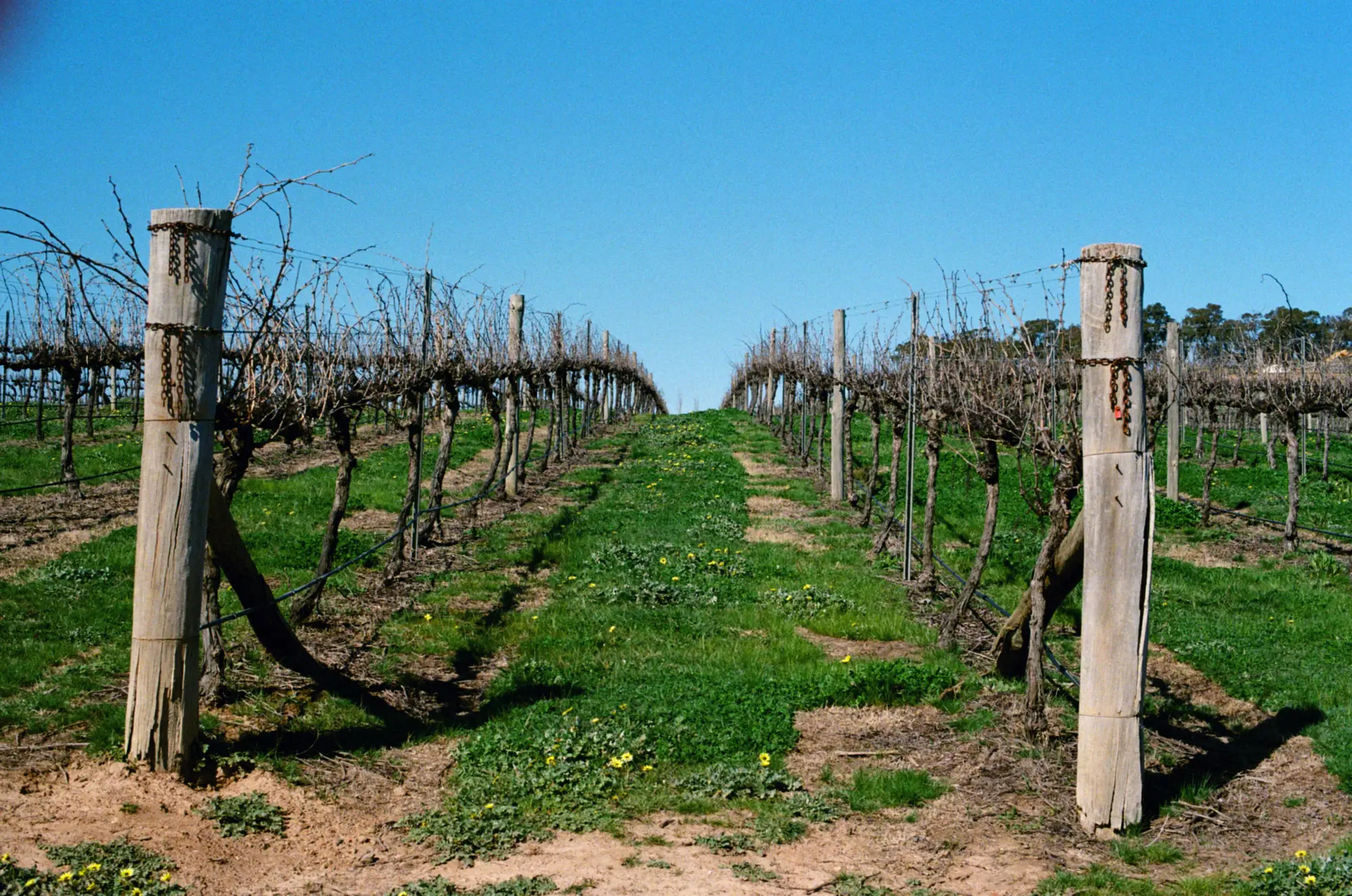
Every planting plan starts with the same bit of arithmetic: divide 43,560 (square feet in an acre) by row spacing times in-row vine spacing, both in feet. That number tells you how many vines a block is supposed to hold on the day it goes in the ground. It does not tell you how many are actually out there five, ten, or twenty years later, but it's the baseline every replant conversation starts from.
The math behind vines per acre
The formula is simple enough to do on the tailgate of a truck:
Vines per acre = 43,560 ÷ (row spacing in feet × vine spacing in feet)
So a block planted on 9-foot rows with vines set every 6 feet in-row works out to 43,560 ÷ (9 × 6) = 807 vines per acre. Tighten the in-row spacing to 5 feet and the same row width jumps to 968 vines per acre. Row spacing moves the number just as hard. Drop to 7-foot rows at 5 feet in-row and you're at 1,244 vines per acre, which starts looking more like a high-density European layout than a standard California VSP block.
The math doesn't care about headlands, end posts, or the odd row that got shorted by a drainage ditch. It gives you a planted-acre number, and that number drifts further from the live count every year a block ages.
Vine density by spacing: a reference table
Here's how density shakes out across the spacings most VSP blocks are built on:
| Row spacing | Vine spacing | Vines per acre |
|---|---|---|
| 6 ft | 4 ft | 1,815 |
| 7 ft | 5 ft | 1,244 |
| 8 ft | 5 ft | 1,089 |
| 8 ft | 6 ft | 908 |
| 9 ft | 5 ft | 968 |
| 9 ft | 6 ft | 807 |
| 10 ft | 6 ft | 726 |
| 10 ft | 8 ft | 544 |
| 12 ft | 8 ft | 454 |
VSP (vertical shoot positioning) blocks tend to cluster in that 8x5 to 10x6 range because the spacing has to accommodate tractor width and the catch-wire posts that hold the canopy upright. Tighter spacing (6x4, 7x5) shows up more in high-density plantings aimed at lower per-vine yield and more concentrated fruit, and it comes with a real tradeoff in equipment pass width and labor per acre for shoot thinning and leaf pulling.
Row orientation and headland width eat into the theoretical count too. A block on a slope with contour rows rarely lines up as cleanly as the flat-ground math suggests, and end rows get shorted by turnarounds more often than growers remember when they're doing density math from the original planting plan.
Where the planting-day math and the actual block stop agreeing
Planting density is a design number. It assumes every vine made it, every graft took, and nothing's died back since. In practice, a block that went in at 807 vines per acre on paper is rarely still running 807 live, healthy vines a decade on. Gopher damage, crown gall, trunk disease, a wet spring that drowned a low corner, replant vines that never caught up to the rest of the row. All of it chips away at the planted number without anyone updating the spreadsheet.
That's the gap a clipboard walk-through is supposed to close and usually doesn't, because walking every row of a 40-acre block and tallying gaps by hand takes a crew day most operations don't have, so the count gets sampled instead and the sample gets called representative. A thin section at the bottom of a slope or a graft batch with a bad take rate won't show up in a few sampled rows, and it won't show up in the planting-day math either.
If you want the actual count instead of the designed one, a block-by-block vine and tree count built from drone imagery catches every gap, every weak vine, and every spot where canopy size says something's off, without anyone walking a row. Worth a look before the next replant budget gets built on a density number that's years out of date.